
Industrial Cable Reel System
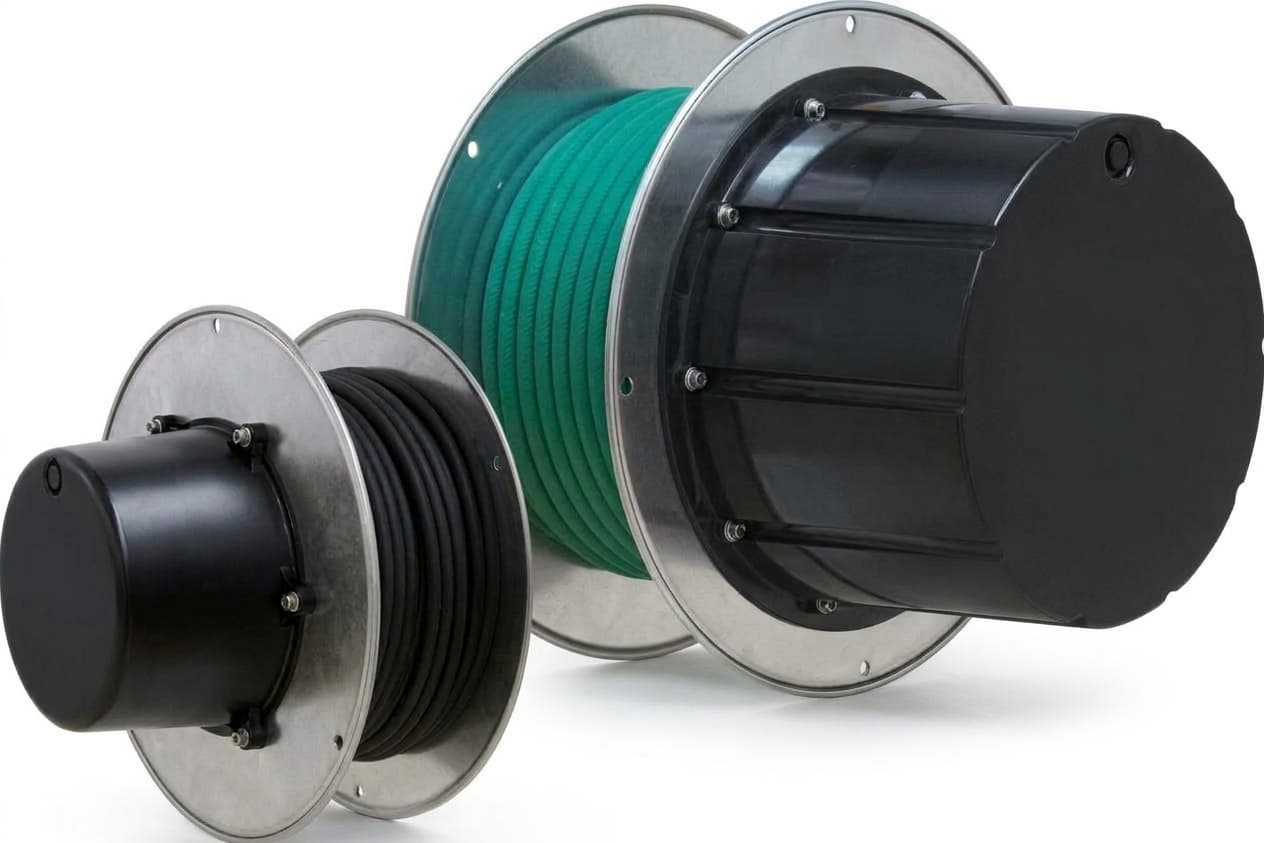
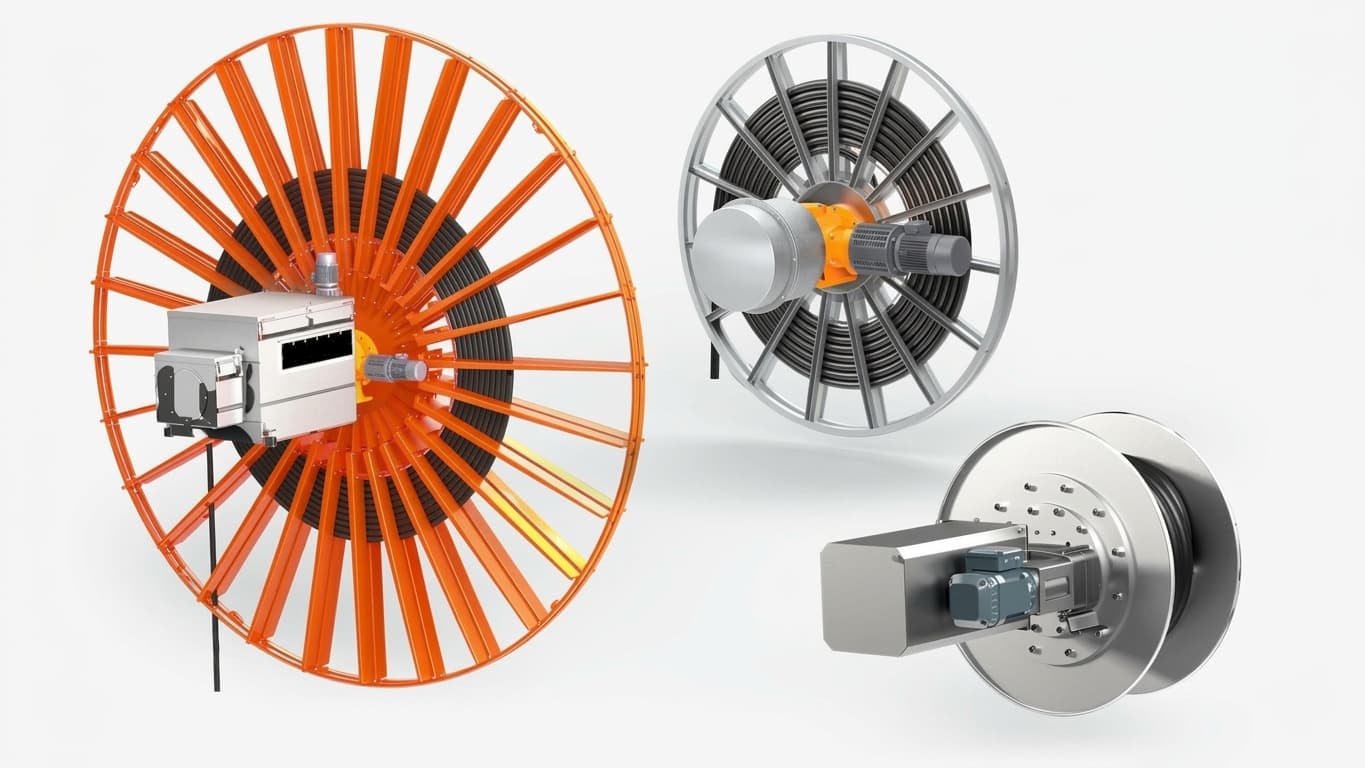
An industrial cable reel winds and unwinds a flexible power or control cable on a rotating drum, providing a continuous electrical connection to equipment travelling back and forth, such as gantry cranes, transfer carts, hoists and lifting magnets. Unlike conductor bars or festoon systems, a reel needs no track along the route, and the cable pays out in a single line behind or below the equipment. Power passes from the rotating cable to the equipment through slip rings inside the reel. Spring-driven cable reel An internal spring tensions as the equipment moves away and pays out the cable, and as the equipment returns the spring winds the cable back onto the drum. The reel works without an external power source and suits short to medium travel, relatively light cables, production lines and hook-mounted attachments such as lifting magnets. Spring tension increases as more cable is paid out, so on long runs the load on the cable increases. Motorised cable reel An electric motor with torque control or an inverter drives the drum in step with the equipment's travel speed, winding and paying out the cable without dragging it on the ground or overstretching it. It suits long travel, heavy cables and work in open yards, mining sites and large gantry cranes. When to choose a cable reel The cable is sealed and insulated along its full length, so the reel suits outdoor work in rain, dust and mud. The working area stays clear of tracks and hanging cables. Maintenance consists mainly of checking the cable sheath, the spring and the slip rings. Reels suit straight-line travel only; for tracks with curves, conductor bars are a better fit. The reel is mounted on the travelling equipment or at a fixed point beside the track. Selection depends on the travel length, the cable weight and cross-section, and the equipment's travel speed and acceleration. The model table lists the drive type, cable capacity and number of slip rings for each model.
Other series in this category
Need a quote for this series?
Tell us what you need: capacity, lift height and environment, and we will come back with a specification and a price.
Request a quote