modular conductor rail system
modular conductor rail system — photo 1

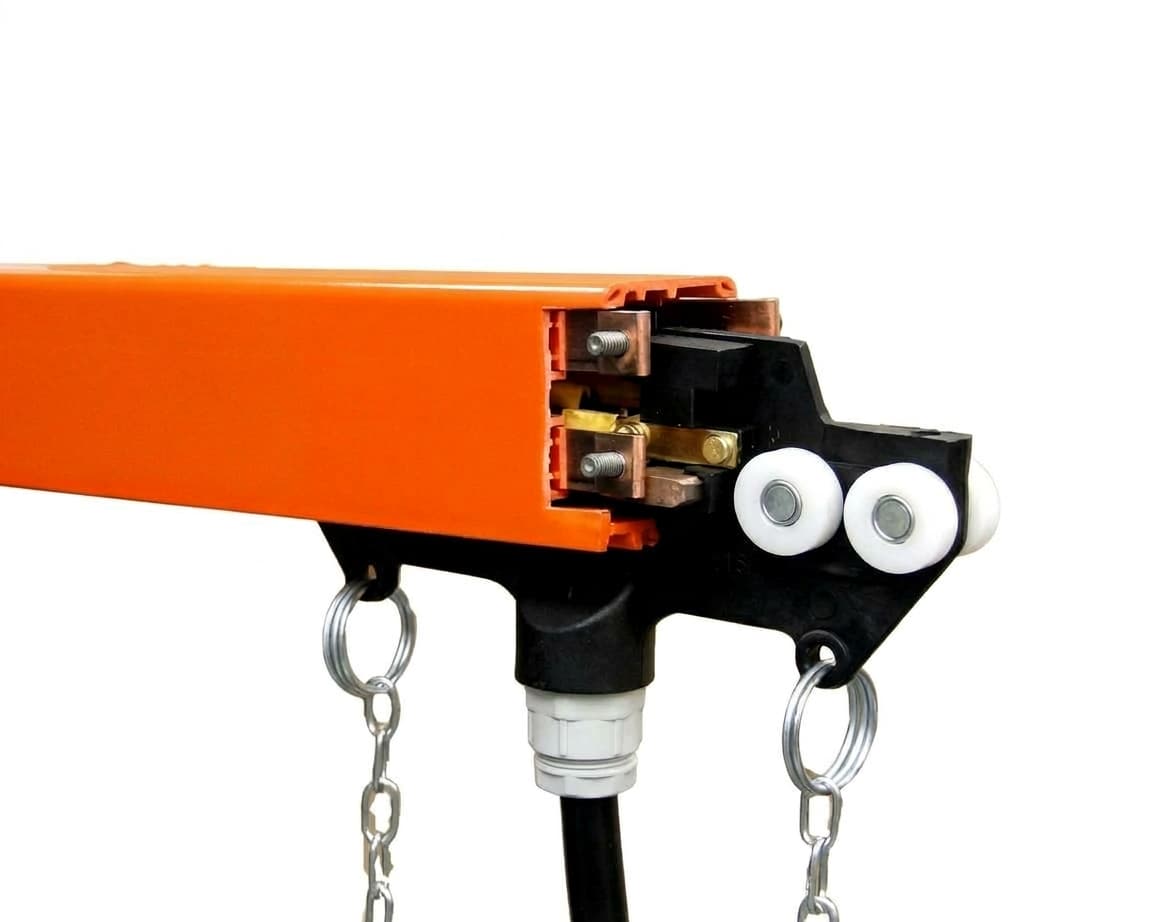
A modular conductor rail system supplies power to overhead cranes, monorail tracks and material handling systems travelling along a track. It is built from fixed-length profile sections that join together to match the runway length, with no exposed conductors or trailing cables. System components Conductor profiles: sections of insulated PVC housing with copper or galvanised steel conductors pre-installed inside. Joint connectors: mechanical connectors that bridge the conductors from one section to the next and keep a continuous surface, so the collector passes between sections without snagging. Current collector: a trolley attached to the crane that runs inside the profile, with spring-loaded carbon brushes keeping continuous contact with the conductors. Feed boxes: connection points to the main electrical panel, at the end or in the middle of the track. Benefits of the modular design The conductors are enclosed in an insulated housing, so live parts cannot be touched from outside. When the hall or crane runway is extended, sections are added to the existing system instead of replacing it. Profiles can be bent at the factory or on site to follow curved monorail tracks. Hangers, connectors and covers clip and bolt together, so installation needs few tools. Copper or galvanised steel Galvanised steel conductors cost less and suit low to medium currents, such as light workstation cranes, hoists and short tracks. Copper conductors suit high currents, heavy cranes and long tracks, because the voltage drop along them is lower. The model table lists the current rating, number of poles and conductor material for each model.

Other series in this category
Industrial Cable Reel System

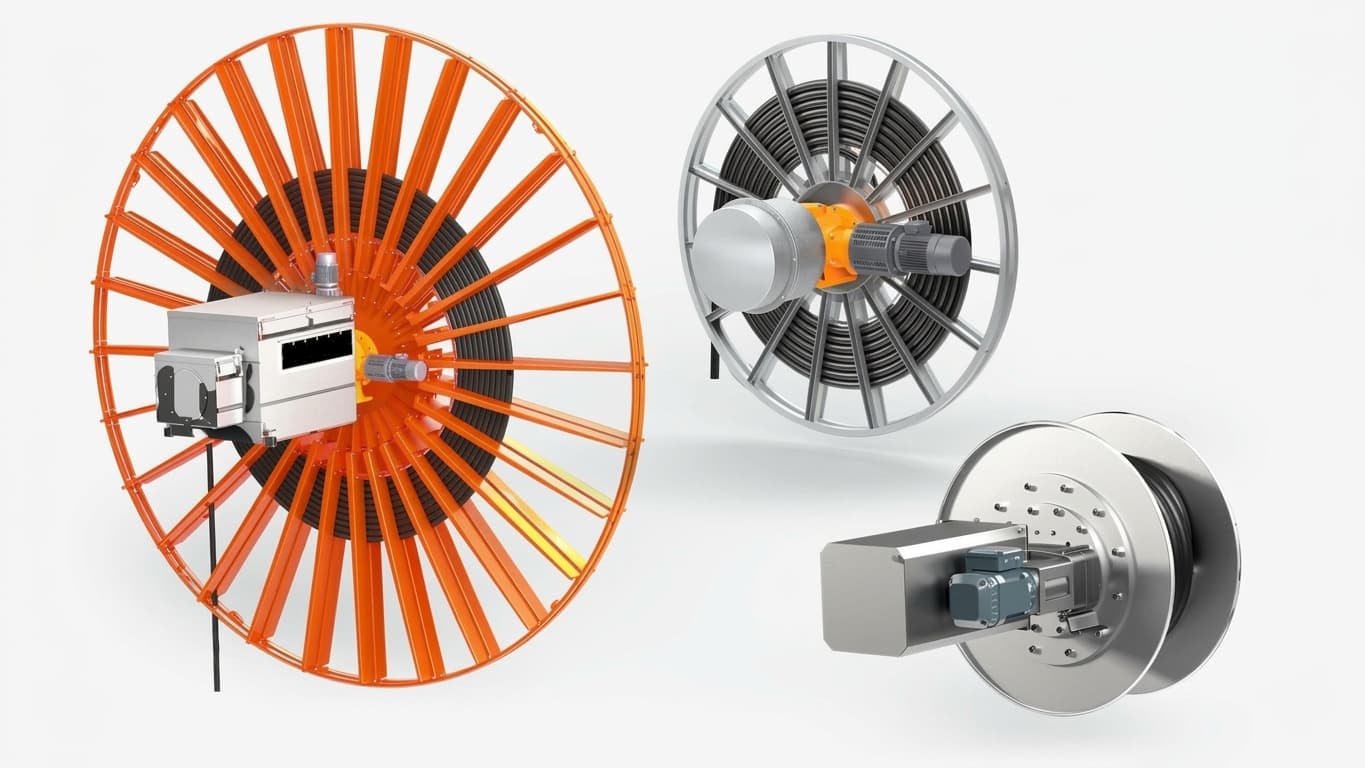
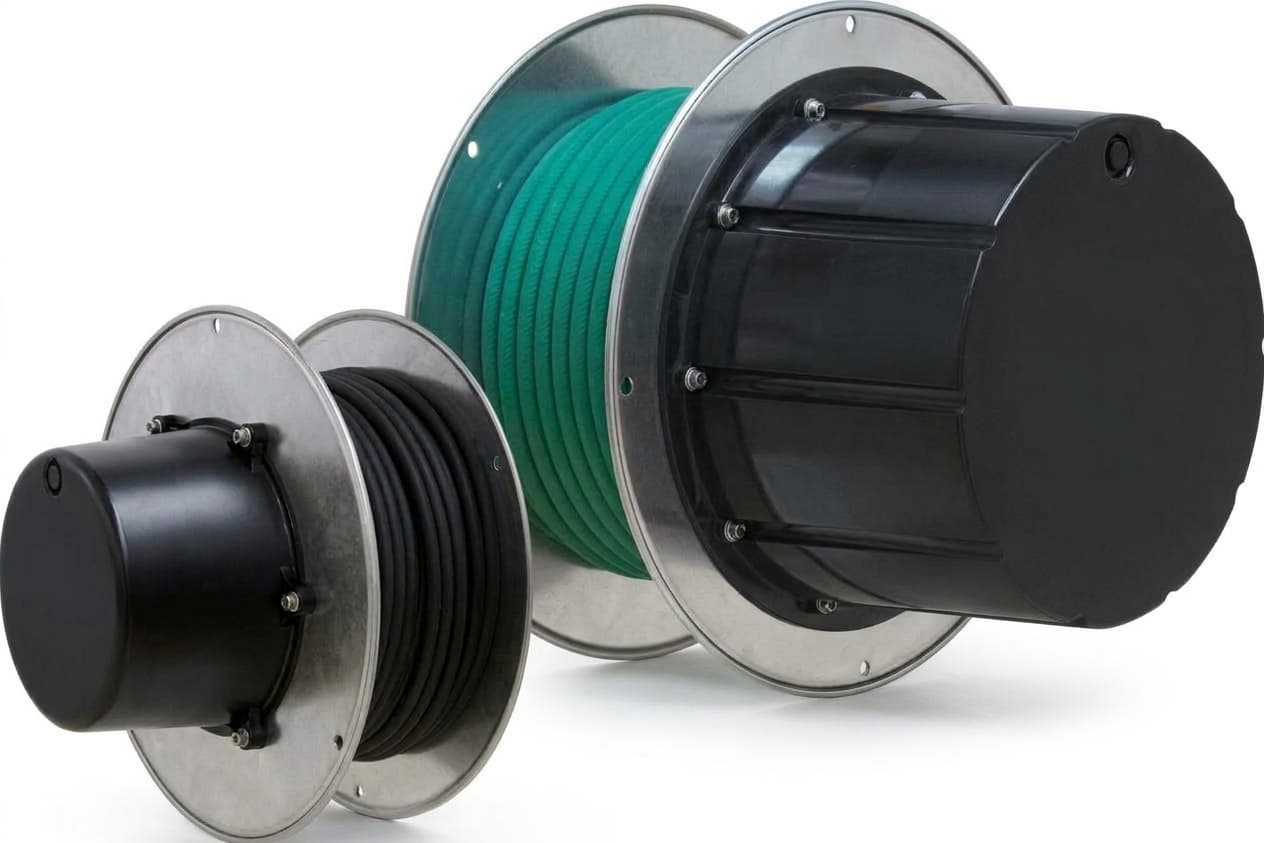
An industrial cable reel winds and unwinds a flexible power or control cable on a rotating drum, providing a continuous electrical connection to equipment travelling back and forth, such as gantry cranes, transfer carts, hoists and lifting magnets. Unlike conductor bars or festoon systems, a reel needs no track along the route, and the cable pays out in a single line behind or below the equipment. Power passes from the rotating cable to the equipment through slip rings inside the reel. Spring-driven cable reel An internal spring tensions as the equipment moves away and pays out the cable, and as the equipment returns the spring winds the cable back onto the drum. The reel works without an external power source and suits short to medium travel, relatively light cables, production lines and hook-mounted attachments such as lifting magnets. Spring tension increases as more cable is paid out, so on long runs the load on the cable increases. Motorised cable reel An electric motor with torque control or an inverter drives the drum in step with the equipment's travel speed, winding and paying out the cable without dragging it on the ground or overstretching it. It suits long travel, heavy cables and work in open yards, mining sites and large gantry cranes. When to choose a cable reel The cable is sealed and insulated along its full length, so the reel suits outdoor work in rain, dust and mud. The working area stays clear of tracks and hanging cables. Maintenance consists mainly of checking the cable sheath, the spring and the slip rings. Reels suit straight-line travel only; for tracks with curves, conductor bars are a better fit. The reel is mounted on the travelling equipment or at a fixed point beside the track. Selection depends on the travel length, the cable weight and cross-section, and the equipment's travel speed and acceleration. The model table lists the drive type, cable capacity and number of slip rings for each model.

View series

Motor Driven Cable Reel

A motor driven cable reel supplies power, control signals or fibre optics to heavy equipment travelling along long routes. An electric motor drives the drum in step with the equipment's travel speed, so the cable winds and pays out under constant tension, without overstretching or dragging on the ground. Unlike a spring-driven reel, which is limited in cable length and weight, a motor driven reel suits long travel and heavy cables. Applications Gantry cranes in open yards, ports and steel stockyards, travelling on rails over long distances. Motorised transfer carts moving moulds, castings and raw materials between halls. Cranes with lifting magnets or electric grabs, where the reel supplies the hook-mounted attachment. Mobile equipment at mines and quarries. Drive methods Torque motor: a motor that can run under load even when the shaft stalls, providing constant winding force. Suited to medium and long travel with straightforward requirements. Inverter drive: the reel controller receives data from the crane's travel system and adjusts torque to speed and acceleration at every moment, reducing load on the cable and extending its life. Magnetic coupling: the motor runs at constant speed, and power passes to the drum through a magnetic coupling that allows slip. Simple construction with little maintenance. System components Drum: on a monospiral drum the cable winds turn over turn in a single plane, and on a wide cylindrical drum the cable winds in several layers across the drum width. Slip rings: carry power from the rotating drum to the fixed electrical panel without twisting the wires. Cable guides: arms with rollers that guide the cable onto the drum during winding and keep it on track. Selection data Selection depends on the travel length, the cable type, number of cores and cross-section, and the position of the fixed feed point, at the end of the track or in the centre. The model table lists the drive type, cable capacity and number of slip rings for each model.

View series
2331

festoon cable system

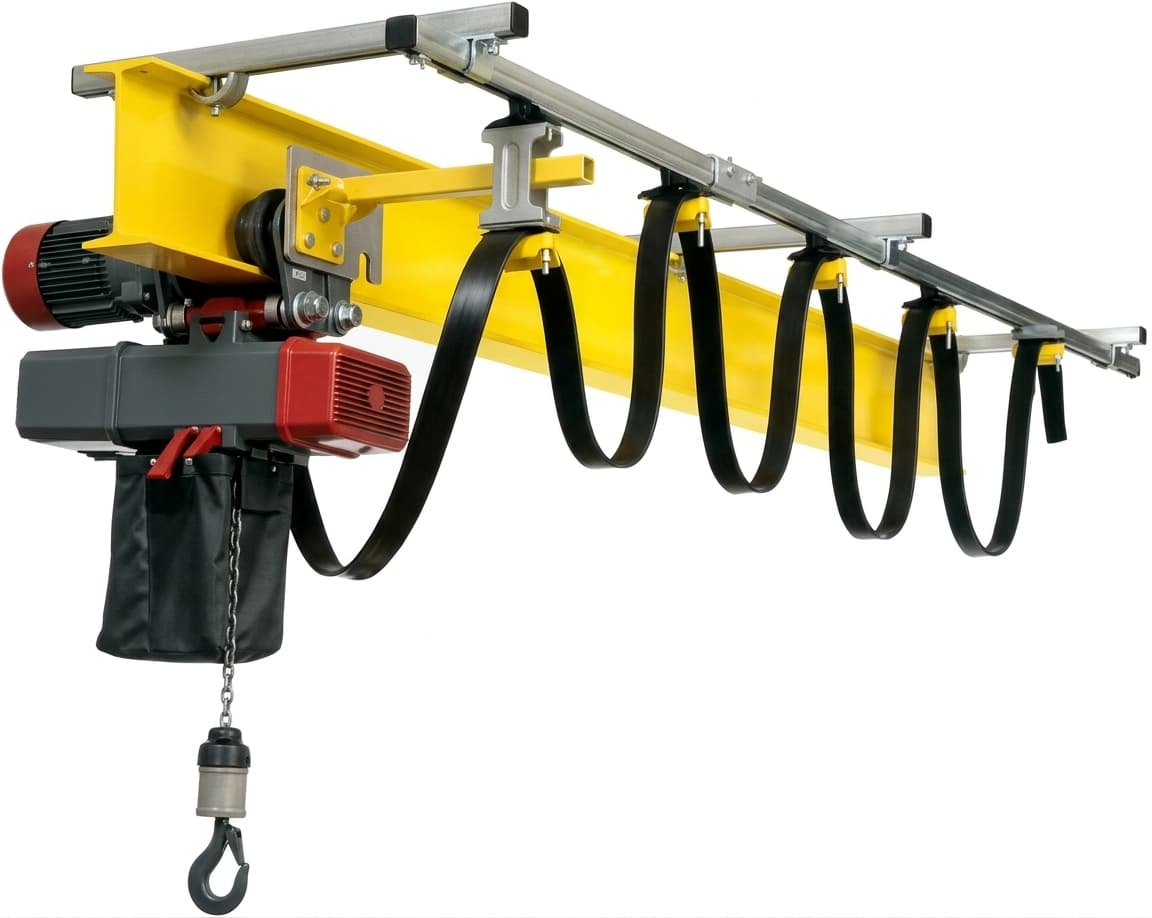
A festoon cable system supplies power and control to the hoist travelling across an overhead crane bridge, as well as to straight monorail tracks and short material handling runs. Flat cables hang from small trolleys running inside a C-shaped steel track. As the hoist moves away the trolleys spread out and the cable extends, and as it moves back the trolleys close up and the cable folds into loops, like a curtain. System components C-track: a galvanised steel or stainless steel track fitted along the bridge girder, with the cable trolleys running inside it. Cable trolleys: four-wheel trolleys with a curved saddle that keeps the cable within its bending radius. Towing trolley: the first trolley in the line, connected to the hoist by a towing arm and pulling the other trolleys behind it. End clamp: a fixed anchor point at the end of the track, next to the crane's electrical panel. Flat cable: a cable designed for repeated movement. The flat shape lets it fold evenly and reduces twisting and internal wear compared with a round cable. When to choose it The cable gives a continuous, insulated electrical connection with no carbon brushes to wear or collect dust and dirt, so the system suits dusty and humid environments and outdoor use. With no sliding electrical contact it does not produce sparks, and also suits explosion-hazard areas when fitted with components rated for them. Power cables for the motors and shielded control cables can run on the same track. Maintenance consists mainly of periodic checks of the cable sheathing and wheels. Design consideration When the hoist reaches the end of the bridge, all the trolleys and folded cables gather at the end of the track and take up space there. This needs to be allowed for in the design, so the hook can still get close enough to the building wall. The model table lists the track size, trolley types and cable widths for each model.

View series

Need a quote for this series?

Tell us what you need: capacity, lift height and environment, and we will come back with a specification and a price.

Request a quote
Call us nowChat with us on WhatsApp