

EOT Cranes (Electric Overhead Travelling Cranes)

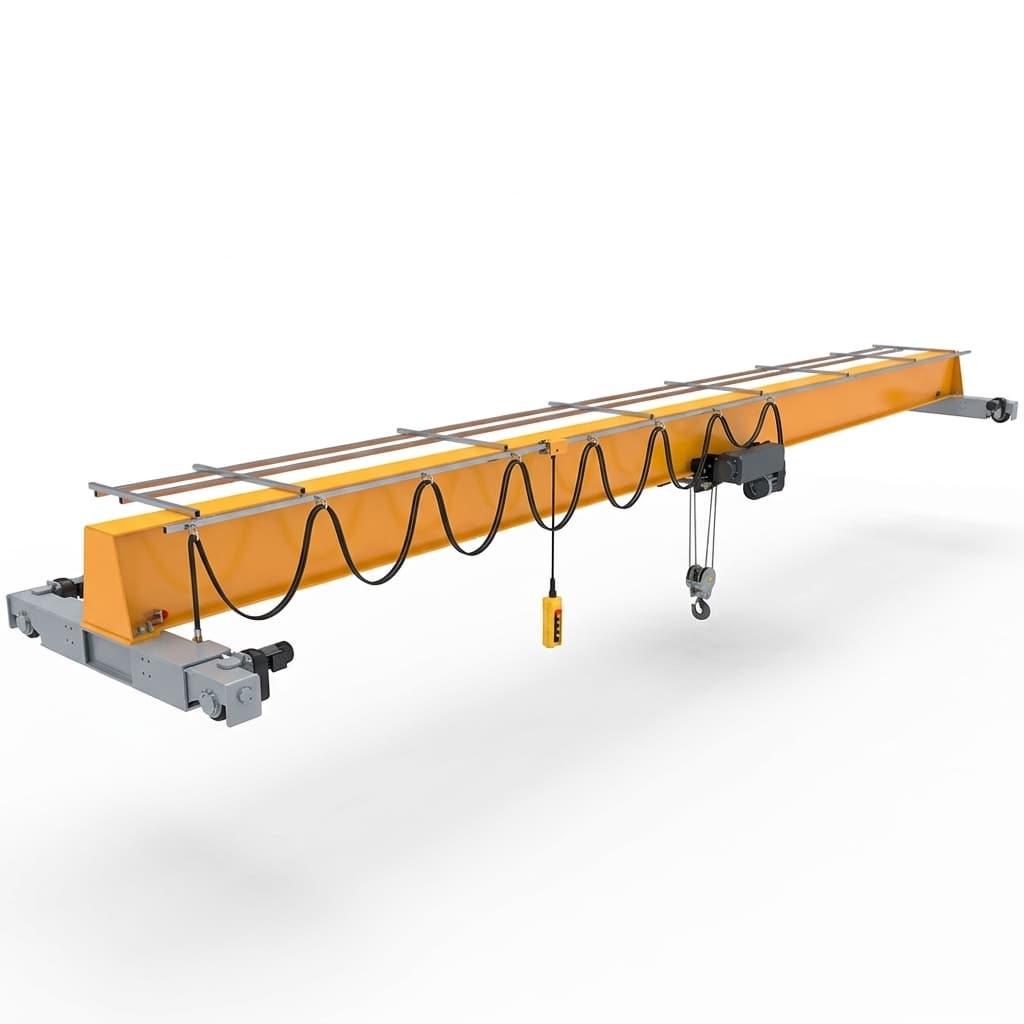
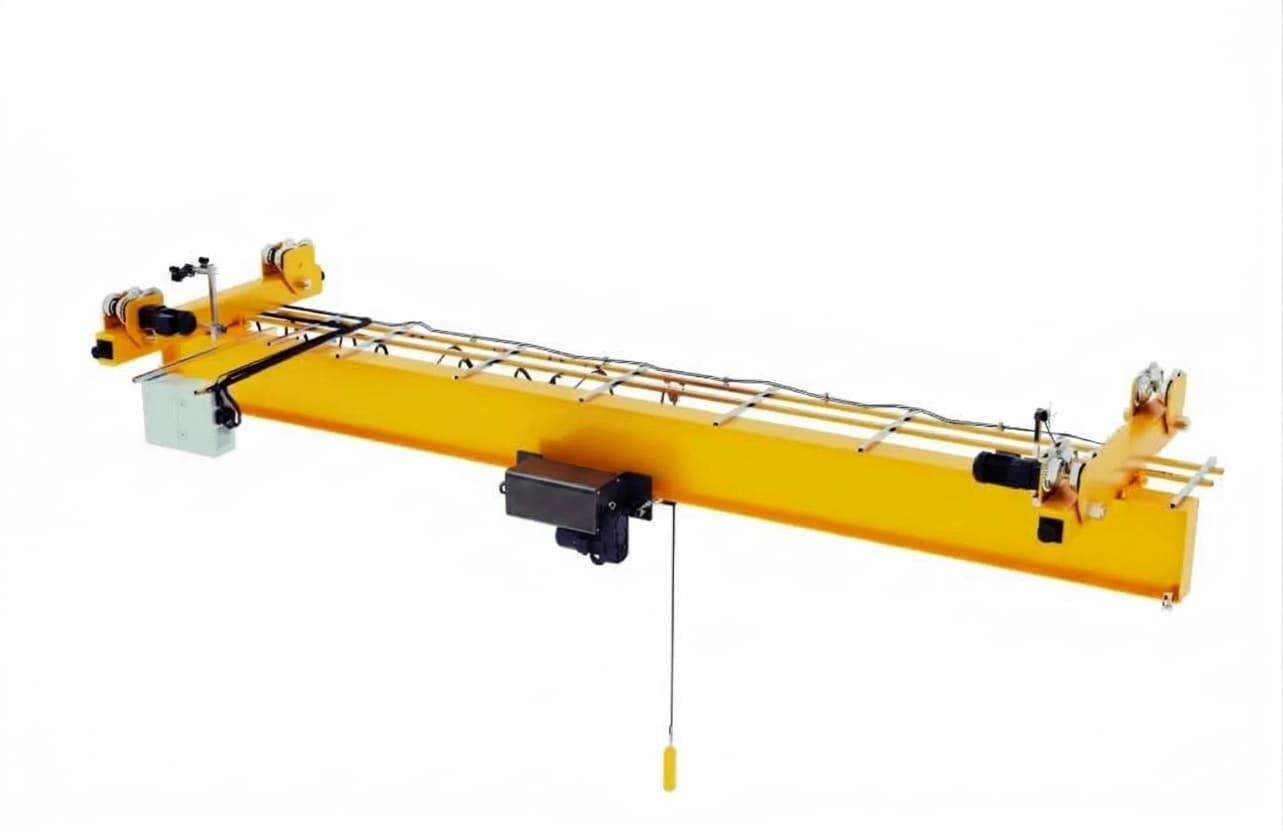
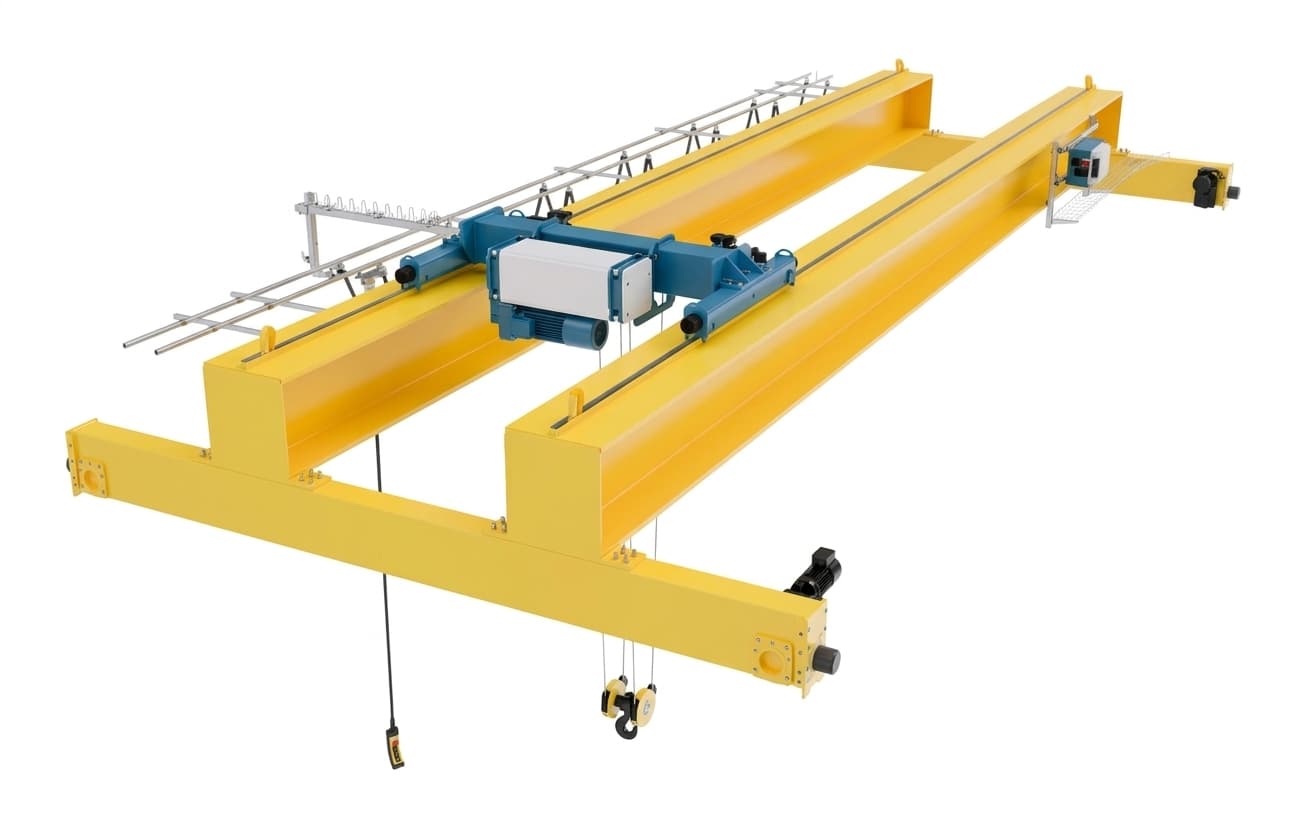
An overhead travelling crane is installed at the top of the building and travels along a fixed runway, covering the whole hall while leaving the floor clear. The bridge travels the length of the hall, the hoist travels across the bridge and the hook raises and lowers, so the load can reach any point under the crane. Overhead cranes are used in manufacturing plants, warehouses, workshops and maintenance halls. Overhead cranes differ in two main ways: Runway mounting Top running crane: the bridge travels on rails mounted on top of the runway beams, which are supported on the building columns or on concrete corbels. This configuration suits heavy loads and wide spans. Underslung crane: the bridge hangs from the roof structure and runs on the lower flange of the runway beams. This configuration suits buildings with no room for columns, and lets the hook get closer to the side walls. Number of girders Single girder: one girder with the hoist running on its lower flange. Lighter construction and quicker to install, suited to light and medium loads. Double girder: two parallel girders with a hoist trolley running on top of them. The hook rises up between the girders, giving more lifting height, and the structure suits heavy loads and intensive duty. The right crane depends on lifting capacity, hall width, available headroom and the existing structure. The model pages list the technical data for each type. The crane moves along three axes, down the length of the building, across the bridge and vertically, and covers the entire floor area without forklifts and without temporary rigging. The first decision is the mounting method. A top running crane travels on rails carried by columns and uses almost the full height of the building, which suits heavy loads and wide spans. An underslung crane hangs from the roof structure, and suits cases where columns cannot be added or where the production floor has to stay clear, at the cost of a shorter span. The second decision is the number of girders. A single girder is lighter, less expensive and puts less load into the structure. A double girder carries far heavier loads and also gives more hook height in the same building, because the hook rises between the girders rather than below them. The third decision is the operating environment. A bridge crane is built around its hoist unit and electrical system, so it can be specified for the environment it will work in. Alongside the standard industrial build we supply versions for ATEX classified areas, for marine and coastal installations, for dusty and high humidity conditions and for aggressive chemical environments. The specification is fixed at the design stage rather than retrofitted, so the environment should be defined in your first enquiry. We supply 129 configurations across three series: single girder from 2 to 12.5 tonnes over spans of 10.5 to 31.5 metres, double girder from 5 to 50 tonnes over spans of 13.5 to 31.5 metres, and underslung from 2 to 10 tonnes over spans of 6 to 20 metres. Standard lifting height is 9 metres and the duty rating is A5 to FEM 2M. Every crane is engineered to your building dimensions, your loads and your operating environment rather than selected from a catalogue. We carry out the site survey, the design, the installation and the commissioning, and stay with the crane through routine maintenance for its working life.
When to choose this
- Top running double girder, for loads from 5 to 50 tonnes and maximum hook height
- Top running single girder, for spans up to 31.5 metres at moderate loads and lower cost
- Underslung, where columns cannot be added or the floor has to be left completely clear
- Special versions for ATEX, marine and severe conditions, specified at the design stage
Series and models
Choose a series for details and a quote.
Filter series
Frequently asked questions
What we get asked about EOT Cranes (Electric Overhead Travelling Cranes)
What is the difference between a single girder and a double girder bridge crane?
A single girder crane has one girder, with the hoist travelling on its bottom flange. It is lighter and puts less load on the runway and the columns. A double girder crane has two girders with a hoist trolley running on top of them, so it carries heavier loads and gives more lifting height in the same hall.
When is an underslung bridge crane the right choice?
When columns cannot be added or the floor has to stay clear. An underslung crane hangs from the roof structure, and before design you must check that the roof can carry the weight of the crane and the load.
What do you need to know to choose a bridge crane?
The lifting capacity, the width of the hall, the headroom available under the ceiling and the existing structure. The operating environment, for example an ATEX classified area or a marine site, is also set at the design stage.
How often must a bridge crane be inspected?
Under section 81 of the Safety at Work Ordinance, a lifting machine and all its parts must be thoroughly examined by a certified inspector at least once every 14 months. Chains, ropes and lifting tackle are examined at least once every six months, under section 75.
Other categories


Need a quote for this?
Tell us what you need and we will come back with a specification and a price.
Request a quote