Hydraulic Pulling Winch
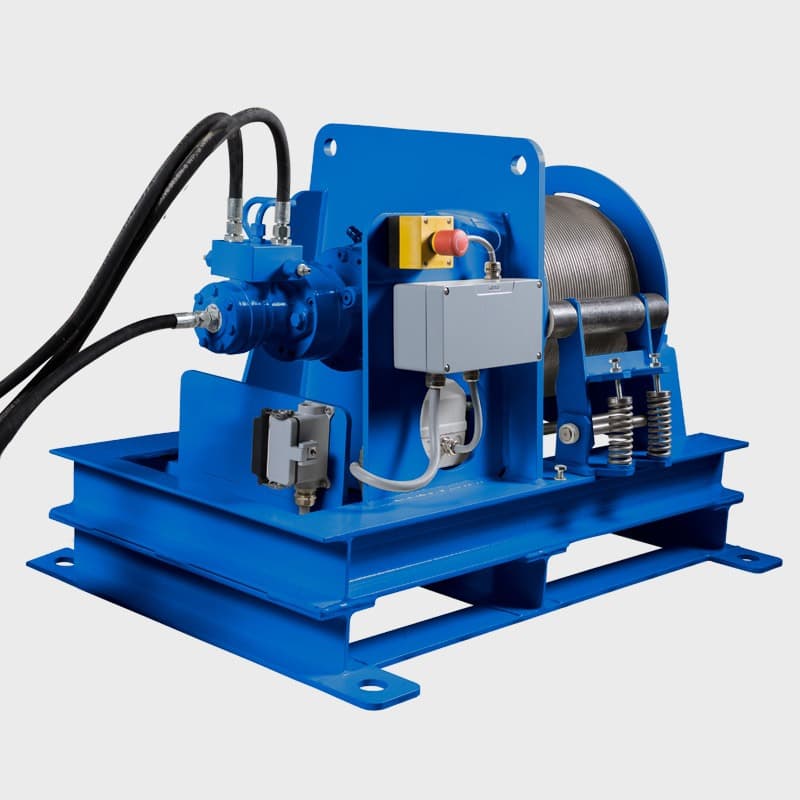
Hydraulic Pulling Winch — photo 1

A hydraulic pulling winch is powered by oil pressure and used to haul, pull and tension heavy loads horizontally or up an incline. A hydraulic motor produces high pulling force from a relatively compact unit, so the winch suits heavy loads in shipyards, ports, on vessels, on recovery vehicles and in heavy industry. Like other pulling winches, it is intended for loads that are dragged or rolled, and must not be used to lift a load vertically unless the model is designed and approved by the manufacturer for lifting as well. Benefits of hydraulic drive The winch suits continuous work under load, as long as oil flow is maintained and the hydraulic system includes suitable cooling. There is no electrical wiring at the drum, so it suits work in rain, marine environments and wet conditions, and in models approved for them, explosive atmospheres. Regulating oil flow at the valve block changes pulling speed progressively, from a slow creep to fast hauling. Installation types Fixed winches: winches anchored to a concrete floor or steel structure in plants, ports and shipyards, for hauling rail cars, carts and boats. They are fed by a separate hydraulic power unit with an electric motor, pump and oil tank. Vehicle and vessel winches: winches mounted on recovery trucks, tow trucks and vessels, fed from the vehicle's hydraulic pump through a power take-off. They usually include a free-spool clutch for paying out the rope quickly by hand, and a brake that locks automatically when pressure drops. Selection data Operating pressure: determines the winch's pulling force. Make sure the hydraulic system does not exceed the winch's rated pressure. Oil flow: determines pulling speed. Flow below the requirement will slow the winch. Counterbalance valve: a valve in the valve block that stops the drum from overrunning when the load is on a downslope or pulling the rope by itself. Also determine the required pulling force, the rope length and the hydraulic power source: an existing power unit, a new unit or the vehicle's pump. The model table lists the pulling force, rope capacity, pulling speed, operating pressure and oil flow required for each model.

Series data

Capacity
2500–37000 kg
Drive
Hydraulic
Duty class (hoisting)
1Am (drum)
Series code
PHW-H

Other series in this category

PHW-E

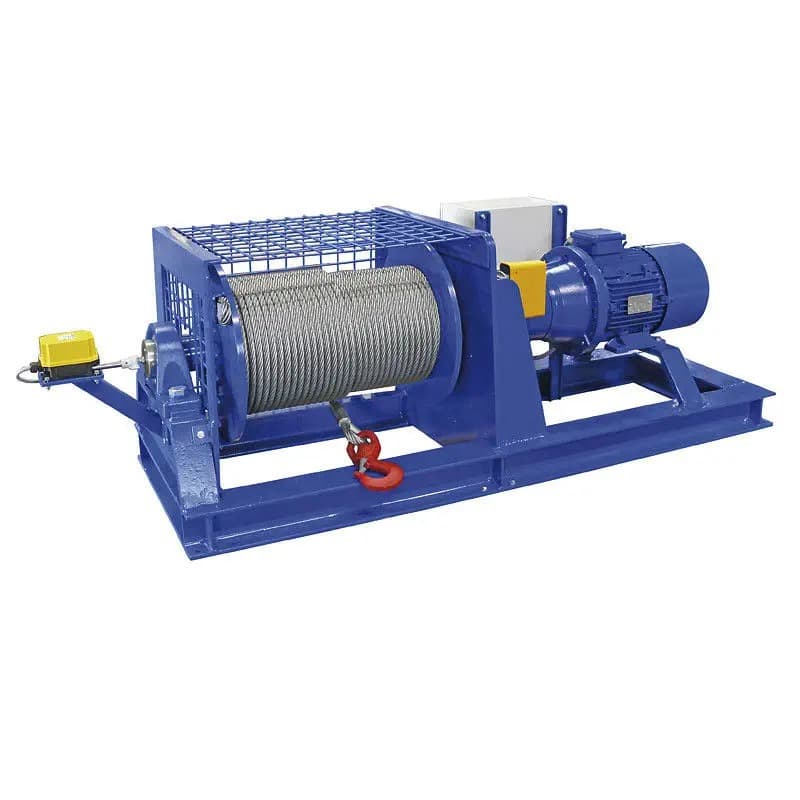
Electric Pulling Winch

An electric pulling winch is a motorised winch for hauling, pulling and tensioning loads horizontally or up an incline. An electric motor drives a drum carrying a steel wire rope or synthetic rope, and a brake holds the load when the motor stops. The winch is intended for loads that are dragged or rolled, and must not be used to lift a load vertically, since it lacks the braking system and safety factors of a lifting winch. Types by application Fixed industrial pulling winches: winches with a steel frame anchored to the floor, used in plants, shipyards and rail depots for repeated hauling of carts and heavy loads along a fixed route. They run on three-phase power, have a large cable capacity drum and overload protection, and are designed for frequent duty cycles. Cable pulling winches: winches for electrical, infrastructure and telecom contractors pulling cables through ducts, conduits and tunnels. They run on single-phase or three-phase power, usually with several speeds, tension control and foot pedal operation that leaves the operator's hands free. Selection data Pulling force: the winch's pulling force is highest on the first layer of rope on the drum and decreases as layers build up. Calculate the required force for the layer the winch will work on. A load on wheels needs far less force than one dragged along the ground, and an incline increases the force required. Rope type: steel wire rope resists abrasion against concrete and rock, but is dangerous if it breaks. Synthetic rope is lighter and less dangerous on breaking, but sensitive to heat, friction and UV. Duty cycle: determine whether the winch will work occasionally or continuously for hours, and choose a model designed for it. Operating voltage: single-phase or three-phase, depending on what is available on site. The model table lists the pulling force, cable capacity, pulling speed and operating voltage for each model.

View series
PHW-L

Pneumatic Pulling Winch

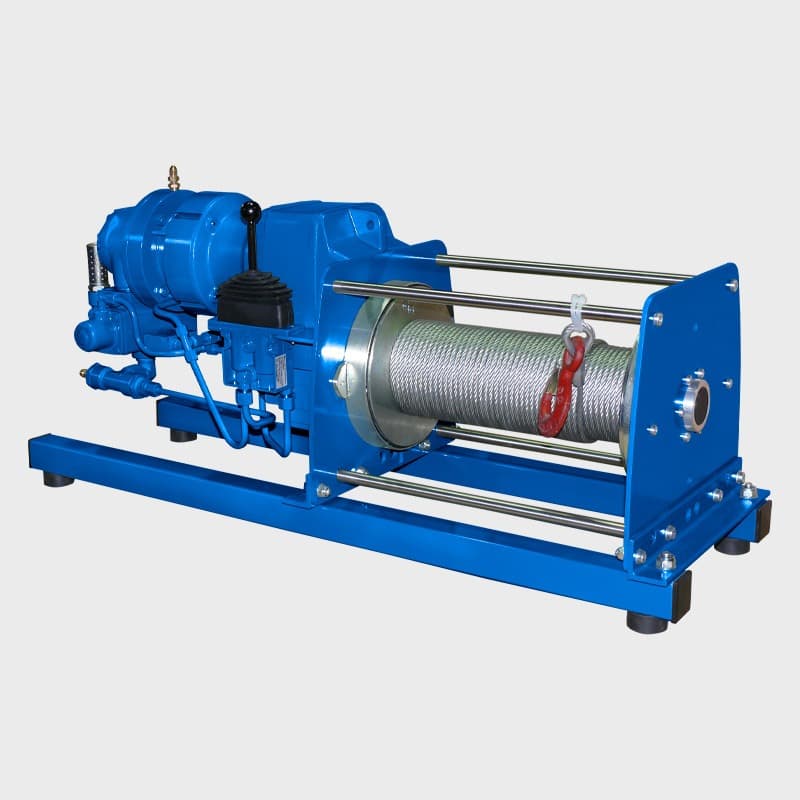
A pneumatic pulling winch is powered by compressed air and used to haul, pull and tension loads horizontally or up an incline. It suits environments where an electric motor is a hazard, such as explosion-risk areas or wet conditions, and continuous work over many hours. Like an electric pulling winch, it is intended for loads that are dragged or rolled, and must not be used to lift a load vertically. Why an air motor An air motor has no wiring, electronics or carbon brushes, so it does not produce sparks. The winch suits refineries, chemical plants, offshore platforms and mines, in models approved for explosive atmospheres. Air flowing through the motor cools it during operation, so the winch suits long periods of work without cooling breaks. The operator controls pulling speed progressively, from a slow creep to full speed, by how far the control lever is pressed. The motor withstands humidity, rain, salt air and dust. Motor types Radial piston motor: delivers high starting torque, suited to pulling heavy loads at relatively low speed. Vane motor: more compact and lighter, reaching higher pulling speeds. Suited to light and medium loads where a fast work rate is needed. Selection data A pneumatic winch uses a large volume of air, so check that the site's compressed air system supplies the pressure and flow the winch requires. Otherwise it will not reach its full pulling force. A filter, regulator and lubricator unit should be fitted on the air line feeding the winch to protect the motor from moisture and dirt. Also determine the required pulling force and the rope length needed for the hauling distance. The model table lists the pulling force, rope capacity, pulling speed, motor type and air consumption for each model.

View series

Need a quote for this series?

Tell us what you need: capacity, lift height and environment, and we will come back with a specification and a price.

Request a quote
Call us nowChat with us on WhatsApp