
Jib Cranes

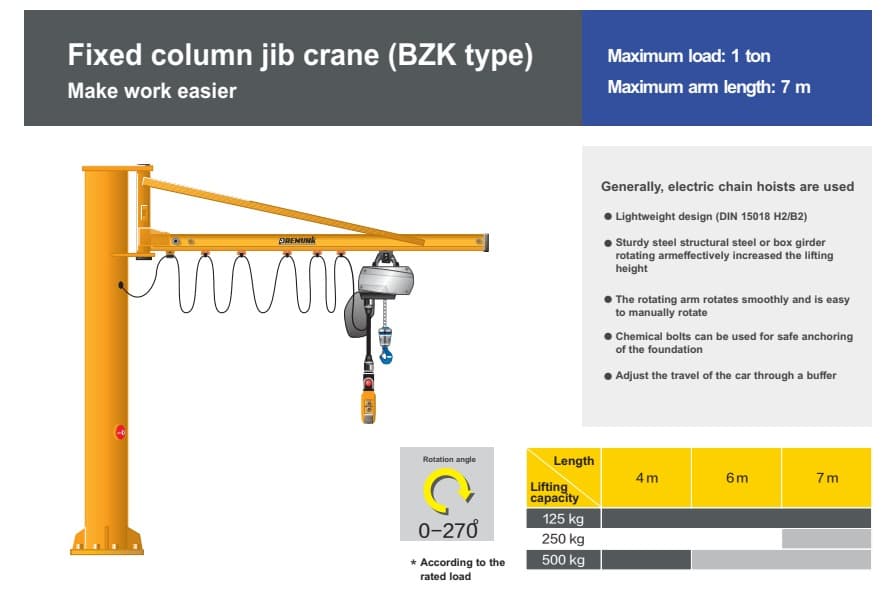
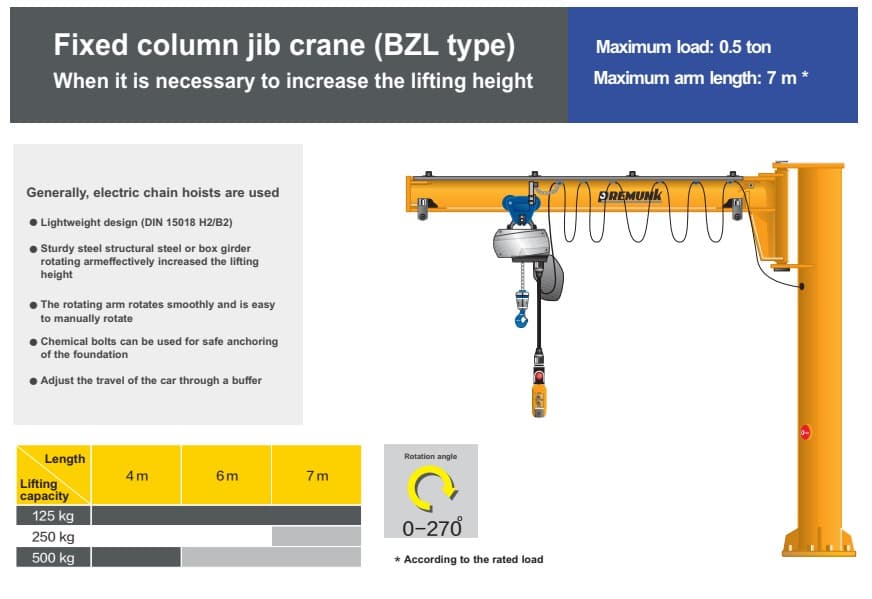
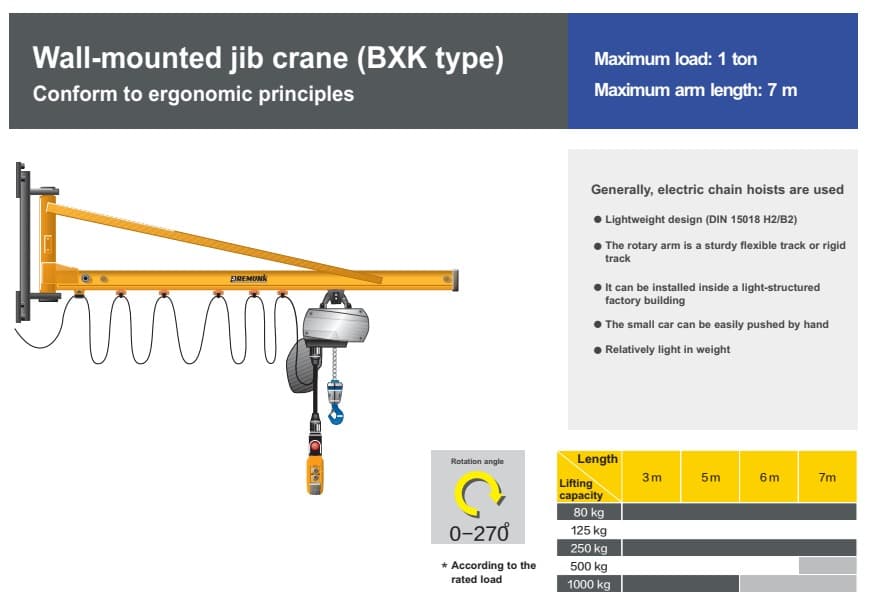
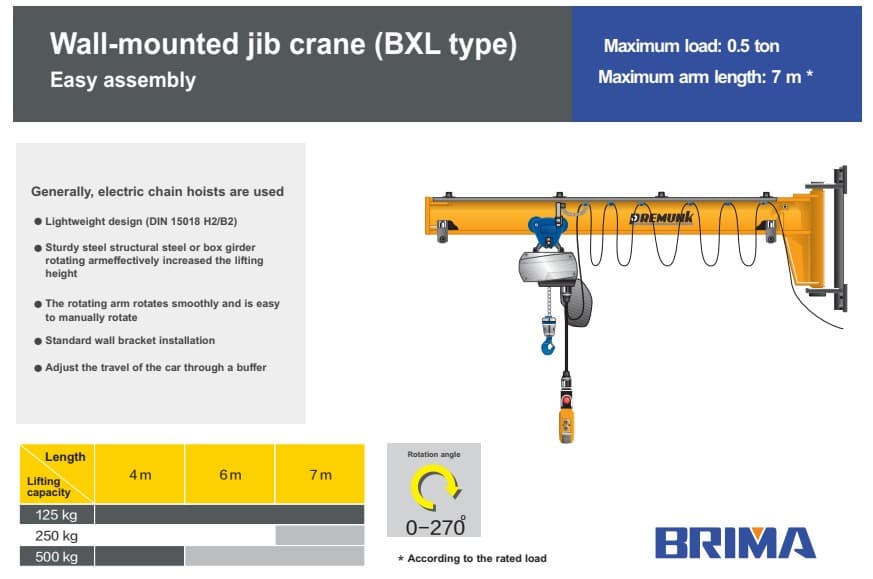
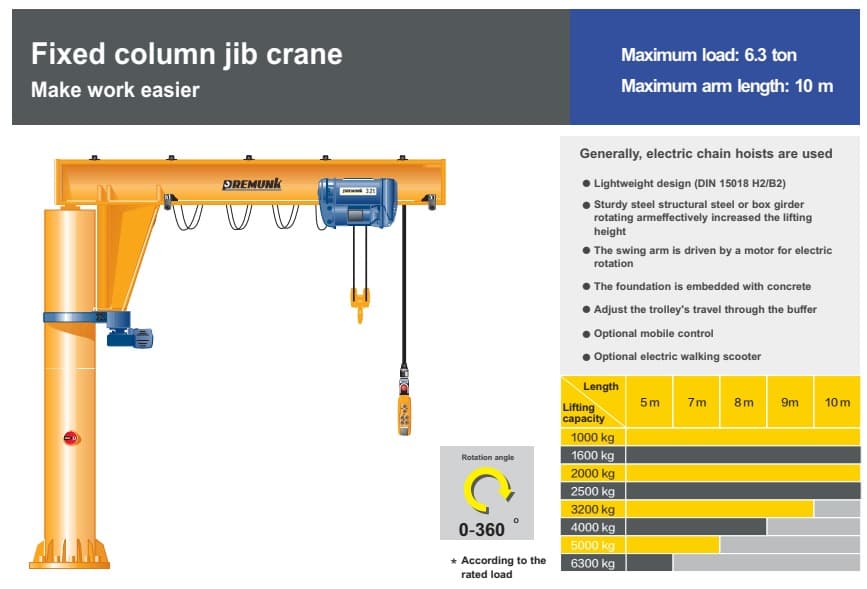
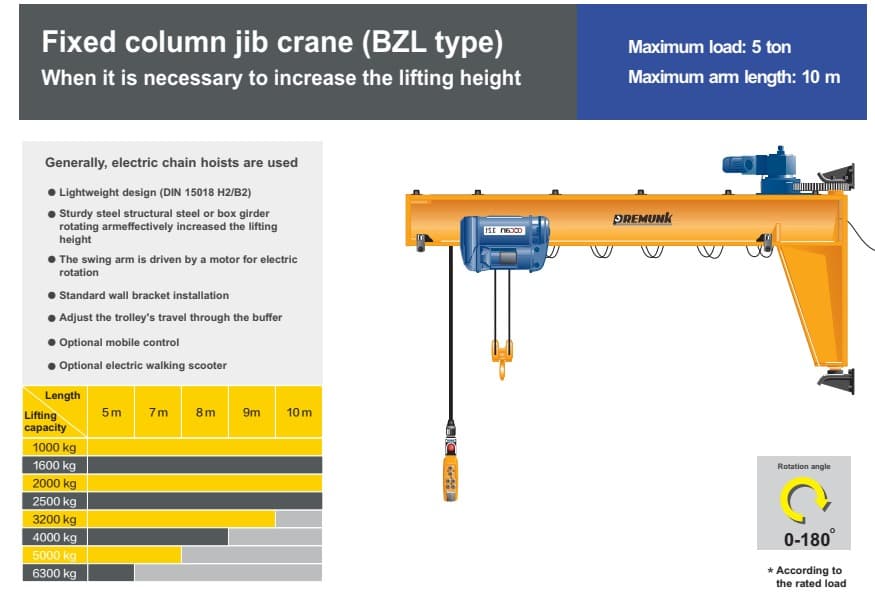
Jib cranes for workstations and machine tending, from the BRIMA catalogue. Six series: four with manual slew from 80 to 1,000 kg on arms of 3 to 7 m, and two with powered slew from 1,000 to 6,300 kg on arms of 5 to 10 m. Each mounts on its own column or on a wall, and slew runs from 180 to 360 degrees depending on the model. The 95 configurations the catalogue offers are set out in each series table, which gives, for every rating, the arm lengths it is sold in.
When to choose this
- Its own column where there is no load-bearing wall by the workstation
- Wall-mounted where the floor has to stay clear
- Powered slew from 1,000 kg upward, manual slew below that
- Arm length falls as the rating rises, and each series table shows which combinations are sold
Series and models
Choose a series for details and a quote.
Frequently asked questions
What we get asked about Jib Cranes
Column-mounted or wall-mounted jib crane?
A wall-mounted jib takes no floor space and suits workstations along walls, provided the wall or column can carry the load. A column-mounted jib needs anchoring in the floor or a foundation, and in the powered version allows a full 360 degree slew.
How much can a jib crane lift?
In the series on this site, 80 to 1,000 kg with manual slew on arms of 3 to 7 metres, and 1,000 to 6,300 kg with powered slew on arms of 5 to 10 metres.
What is the slewing angle of a jib crane?
Up to 270 degrees for a manual column crane, 360 degrees for a powered column crane, up to 270 degrees for a manual wall crane and up to 180 degrees for a powered wall crane.
Does a jib crane need a certified inspector's examination?
Yes. Section 79 of the Safety at Work Ordinance lists a crane in the definition of a lifting machine, so it is examined by a certified inspector at least once every 14 months, under section 81.
Other categories


Need a quote for this?
Tell us what you need and we will come back with a specification and a price.
Request a quote