
Pulling Winch
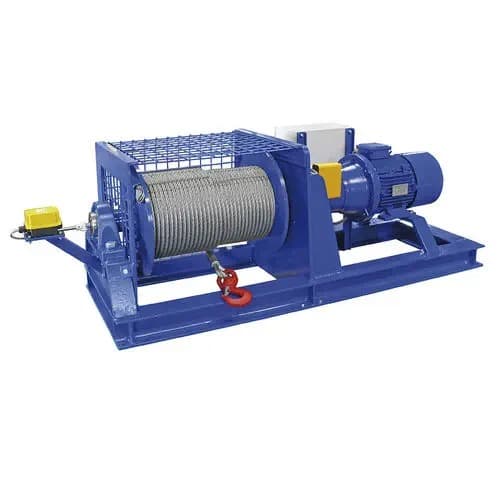
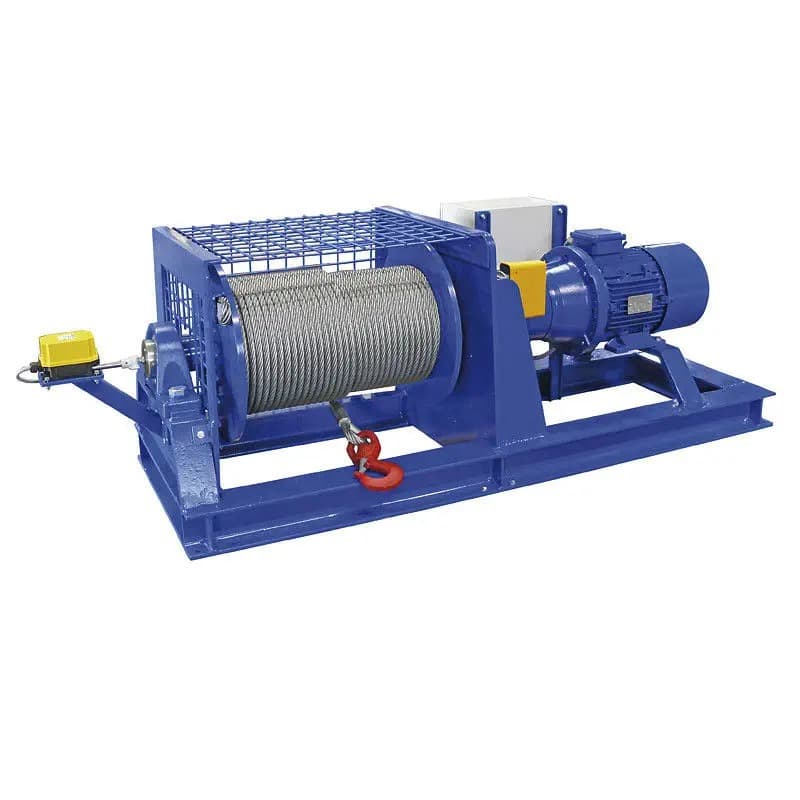
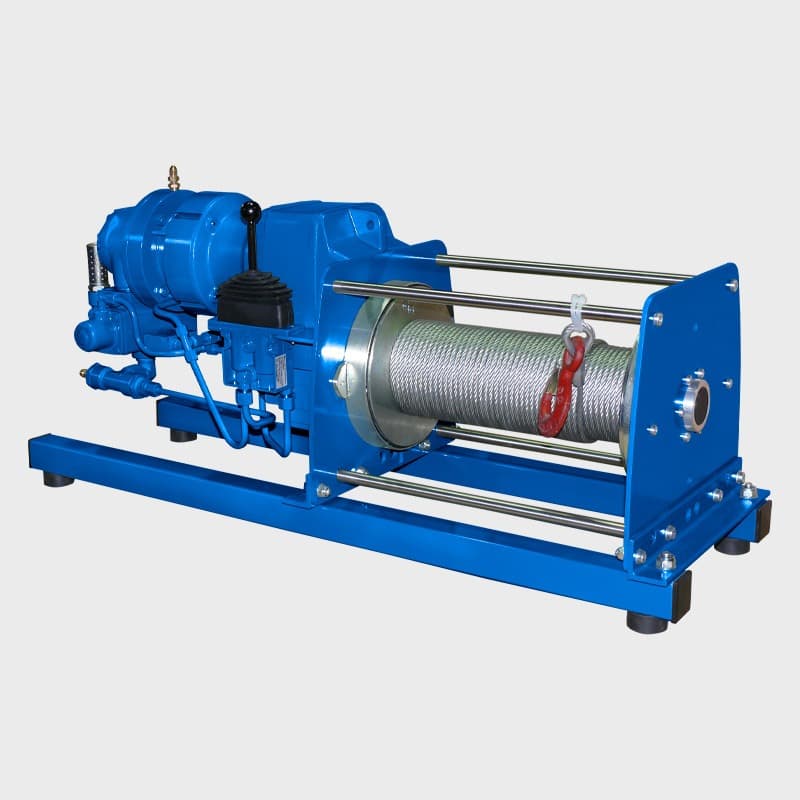
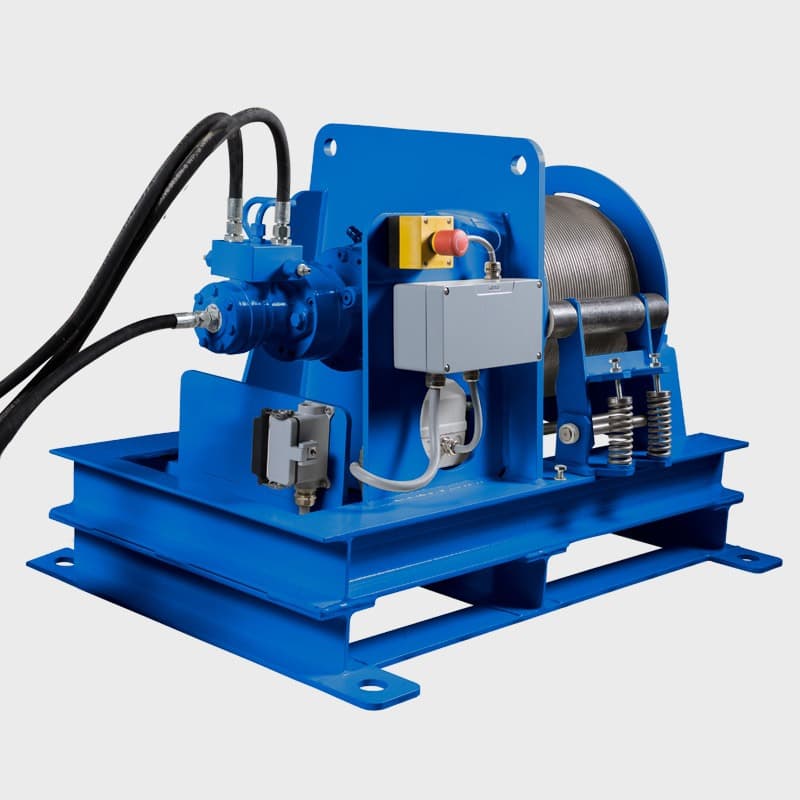
A pulling winch hauls or tensions a load horizontally or up an incline, using a steel wire rope or synthetic rope wound on a drum. It is used to haul carts and loads along a track in a plant, pull equipment up ramps, pull cables through ducts and conduits, and tension cables and loads. A pulling winch is not a lifting winch. Lifting winches are designed with a braking system and safety factors suited to a suspended load, whereas a pulling winch is intended for loads that are dragged or rolled. A pulling winch must not be used to lift a load vertically. Types of pulling winch Industrial electric pulling winches: winches with a steel frame anchored to the floor or a structure, with a large cable capacity drum, for repeated horizontal hauling of carts and loads along a fixed route. Cable pulling winches: electric winches for continuous work, usually with two speeds and foot pedal control, leaving the operator's hands free to guide the cable. Intended for electrical, infrastructure and telecom contractors pulling cables through ducts, tunnels and underground conduits. Manual winches and pulling machines: hand-cranked geared winches, and pulling machines where the wire rope passes through the unit instead of winding on a drum, so pulling length depends only on rope length. Suited to sites with no power supply. Selection data The pulling force needed depends on how the load moves: a load on wheels needs far less force than one dragged along the ground, and an incline increases the force required. Steel wire rope resists wear and abrasion better but is heavier and more dangerous if it breaks. Synthetic rope is lighter and less dangerous on breaking, but more sensitive to heat and abrasion. Also check that the drum capacity matches the pulling distance and that the available power supply suits the winch. The model table lists the pulling force, cable capacity, pulling speed and operating voltage for each model. We supply pulling winches in three drive types, from 1.2 to 37 tonnes. The electric version runs an IP54 braked motor rated 2.2 to 45 kW. The pneumatic version works at 7 bar with an air consumption of 90 to 350 litres per second, which suits areas where electricity is not permitted. The hydraulic version is the fastest of the three at up to 35 m/min, and fits mobile equipment that already carries a hydraulic system. The drum is built to classification 1Am with a diameter at least 16 times the rope diameter, and the rope is selected for the pulling force at the fifth rope layer rather than the first. This is easy to miss: the force drops by roughly thirty percent between the first layer and the fifth, so we publish both figures for every model. The standard build ships without rope and without controls, both selected separately to suit the application. A load limiter is required under CE for any application above 1,000 kg working load limit. Explosion-proof motors and marine-duty versions are available, with paint systems to ISO 12944 grade C4 or C5-M.
Series and models
Choose a series for details and a quote.
Other categories


Need a quote for this?
Tell us what you need and we will come back with a specification and a price.
Request a quote